
What Should Second Home Owners Know About Slab Leaks?
A second home slab leak can run for weeks between visits, harming floors and value. We find and fix slab leaks in second homes in all 50 states and DC. A visit takes one to three hours. We trace the leak to about one to three feet. Check for leaks each arrival.
A second home differs from a rental or a vacant cabin. You live there part-time. Or you hold it as an asset. Either way, long spans pass with no eyes on the floors. This page shows how to add leak checks to your routine. Watch the place from afar. Pick fixes that guard resale value. If it sits empty all season, see our vacation home owners page.
Why Do Long Gaps Between Visits Raise the Stakes?

Time is the enemy. A leak that starts after you leave gets weeks to work unseen. Under-slab water eats away soil. Lost soil lets the slab sink. Sinking slabs crack tile, warp wood floors, and jam doors. Fix costs climb with each week of wait.
Property value is the deeper worry. A second home is an asset. Marked harm and mold scare buyers and appraisers. Catch it early. It stays a pipe job, not a sale-day mess. Selling? Our home buyers and sellers page covers checks and deals.
How much damage can a month of leaking do? A lot. Weeks of water buckle floors and grow mold under trim. Early finds keep the fix small.
Does part-time use make leaks more likely? It makes them harder to catch, which is the real risk. Pipes age the same either way. But no one is there to hear the early signs.
When Should Second Home Owners Call Us?
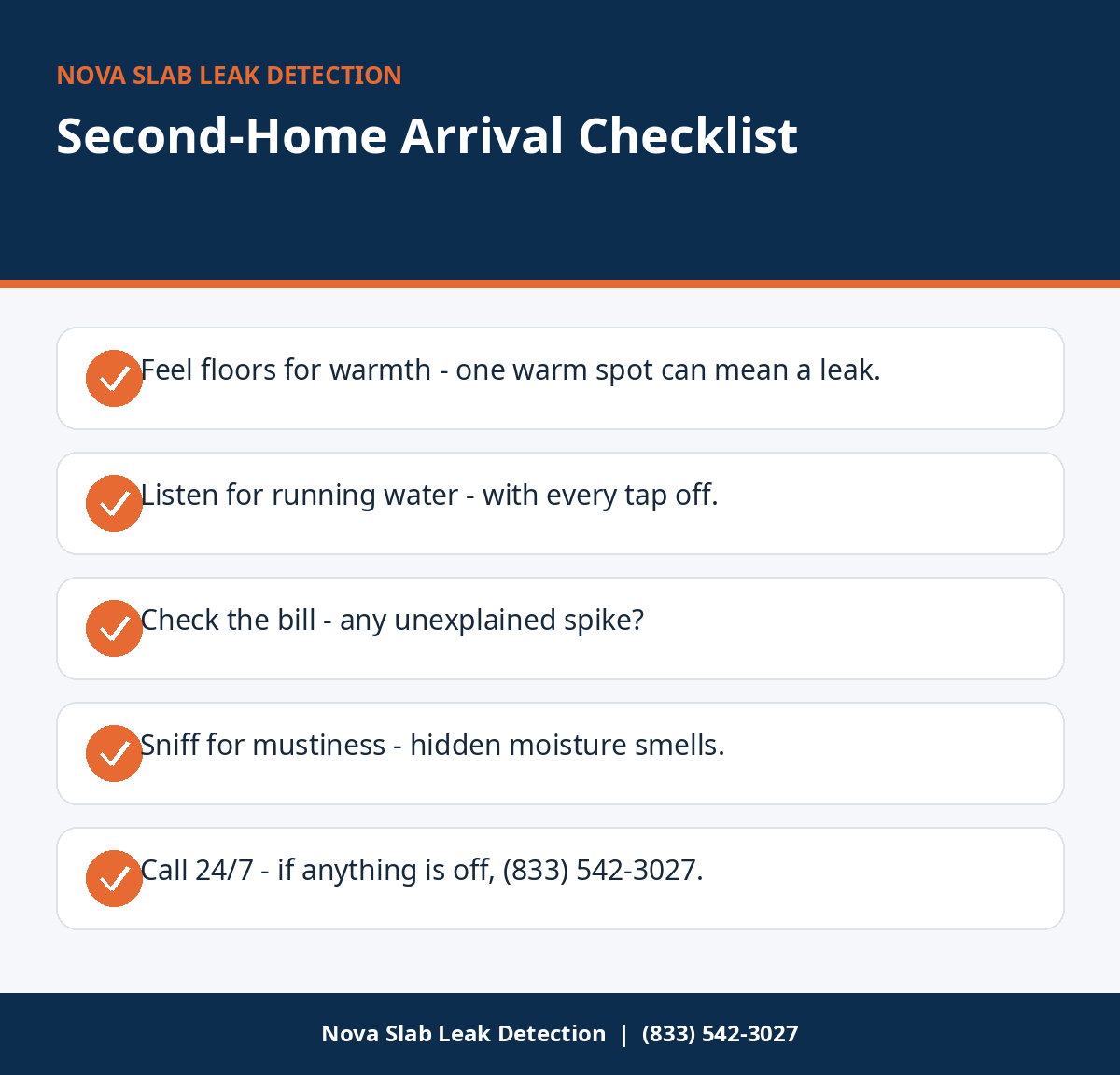
Build these moments into your routine:
- Each arrival: walk the floors and listen before you unpack.
- Any water bill that looks wrong for your days there.
- A musty smell when you open the house.
- Warm or damp spots underfoot in any room.
- Tile cracks or baseboard gaps that are new.
- Before you list the home — a clean check pre-listing builds buyer trust.
Also call if a neighbor, watcher, or sensor flags trouble while you are away. We answer 24/7 at (833) 542-3027. We can work with your key holder. Learn each warning sign in our problem guides.
Where Should You Look on Each Arrival?
Start at the water heater and work out. Feel bath and kitchen floors with bare feet. Warmth stands out. Press trim for soft spots. Sniff shut rooms for damp smells. Check the meter too. Shut all taps. Watch the dial. If it moves, water flows somewhere.
Do not skip rooms you seldom use. Water runs along pipes. It can show far from the break. Guest baths and washrooms are classic surprise spots. A ten-minute walk on arrival costs nothing and can save thousands. See all our readers on our who we help hub.
Who Takes Care of the Job While You Are Away?
We do. Our company is Nova Slab Leak Detection, a slab leak detection and fix team made up of our own staff. Nova’s own techs do the work. Call us from your main home and tell us what you found. We set the visit. We work with your key holder. We report by phone.
You approve each step before it happens. We explain the facts. We lay out fix options with clear prices. We start work only with your go-ahead. Most second-home owners skip the extra trip. Your tech handles it and sends the note.
Can you handle it all without me flying in? In most cases, yes. Detection and many repairs run fine through a key holder. We keep you posted by phone at each stage.
What if I split time evenly between two homes? Treat both homes the same. Arrival checks, bill watching, and a fast call at the first sign. Leaks do not care which house is home.
How Can You Watch a Home You Visit Part-Time?

Layer these habits and the gaps shrink:
- Check the water bill online each month, even for months you missed.
- Fit a smart water meter or leak sensors with phone alerts.
- Ask a neighbor or watcher to walk through between visits.
- Shut the main valve for long gaps, where practical.
- Save our number: (833) 542-3027.
The bill is your best remote sensor. A home with no one in it should use almost no water. Any use is a red flag. Sensors add a second layer for sudden bursts. Together they catch what your calendar misses.
What Repair Protects Your Property Value Best?
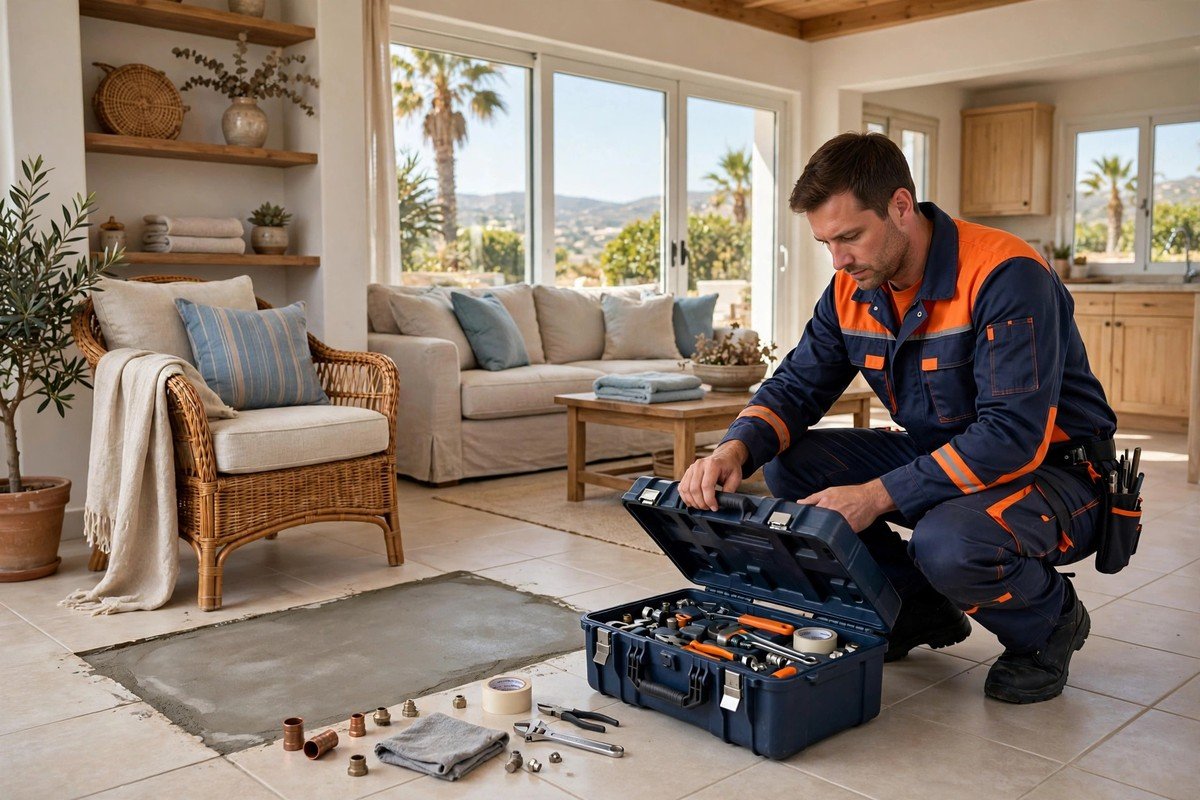
For a second home, think long term. The cheapest fix today is not always best for resale. Prices are national estimates as of 2026.
| Fix option | Value angle | Price (national estimates as of 2026) |
|---|---|---|
| Spot fix | Fixes one leak; fine for a newer system | $1,500–$4,500 |
| Reroute | New line, no slab damage; buyers like it | $3,500–$7,000 |
| Tunneling | Reaches the pipe with less indoor mess | $3,500–$8,000 |
| Epoxy lining | Renews old lines; good records for resale | $3,000–$6,000 |
| Whole-home repipe | Strongest selling point for an older home | $4,500–$15,000 |
Keep each receipt and our written note. Pro fix records calm buyers and appraisers. Aging pipes? A repipe or reroute turns worry into a selling point. See full pricing in our cost guide.
FAQs
How often should I check my second home for leaks?
Walk it on each arrival and watch the bill monthly. Ask a watcher to check between visits.
Can a leak hurt my resale value?
Yes, if it leaves visible damage or mold. A fast, documented professional fix guards value.
Should I get a visit before selling?
It is smart for older homes. A clean report builds buyer trust. See our home buyers and sellers page.
What if my watcher finds a leak while I am away?
Call us at (833) 542-3027. We work with your watcher and report to you by phone.
Does insurance cover a leak found between visits?
Sudden water damage is often covered. Slow leaks may not be. Plans differ — check your own plan or talk to your agent.
Is shutting off water between visits worth it?
For long gaps, yes — no pressure means no leak growth. Label the valve so your watcher can find it. Call (833) 542-3027. We answer 24/7 and our techs work with your key holder.