
What Should Policyholders Know About Slab Leak Claims?
A slab leak insurance claim turns on one point: sudden harm, or slow wear? We find and fix slab leaks in all 50 states and DC. We give you the written records adjusters want. A visit takes one to three hours. We trace the leak to about one to three feet. Call us before you file.
Plan words are tricky. Most plans pay for sudden water harm but bar slow seepage and pipe wear. The pipe itself is often not paid for, though the harm it caused may be. This page notes the split. What to log. How our notes help. Plans shift a lot. Read your plan or ask your agent. This is plain help, not plan advice. Our full insurance claims guide goes deeper.
Why Does Sudden vs. Gradual Matter So Much?

It is the line most claims turn on. A pipe that bursts this week and floods the kitchen is sudden. That tends to be paid for. A pinhole leak that damped the slab for two years is slow. That tends to be barred. Slab leaks live in the gray zone. They start small and grow quiet.
Your best move is speed plus proof. Call us at the first sign. Our dated note sets when we found and proved the leak. Dated photos show how far the harm spread. Bills show when use changed. Together they show swift discovery. That is what adjusters want.
Does insurance cover the pipe repair itself? Often not. Many plans cover the resulting water damage but not the pipe. Policies vary — read yours or ask your agent.
What if the leak ran for months before I noticed? File anyway with full records. Some plans still cover resulting harm. Your agent can say where you stand.
When Should Policyholders Call Us?
Call us at these times:
- You spot a sign and want it proved fast.
- You need a pro note before you file.
- Your adjuster seeks expert facts.
- A claim drew doubt and you need plain proof.
- You buy a home and want a pre-deal check.
Call before you rip anything up. Adjusters want to view harm as found. Our calm methods keep the scene whole. We take calls 24/7 at (833) 542-3027. See signs to watch in our problem guides.
Where Do Claims Get Stuck?
Three snags trap most claims. One, the cause fight. The plan calls it wear. You call it sudden. Our note states what we found in plain, dated words. That helps. Two, the old issue. Harm in a past check can fuel denial. Three, late filing. Months of wait after find sink any claim.
Dodge all three with fast moves and clean files. Hold big fixes till the adjuster views the harm, except in a crisis. Curb more harm — shut water, shift goods — but keep the scene whole. See all our readers on our who we help hub.
Who Does What in the Claim Process?
You note and log. We find and write up. The adjuster rules. As a company, Nova Slab Leak Detection is devoted to slab leak detection and fixes by our own staff. Nova’s own technicians do the work. Your tech’s written note joins your claim file.
We do not haggle with insurers for you. We do not guess at cover. We give facts: leak spot, how found, date found, options, costs. You and your agent take it from there. Clear facts help all.
Will you speak with my adjuster? We supply the written report adjusters seek. Tech queries on our facts can go via you, report in hand.
Should I file before I check? Get the check first if you can. Filing with a pro note in hand beats filing on a hunch.
What Records Do Adjusters Want?

Build this file before and during the claim:
| Document | Why it matters |
|---|---|
| Dated photos and video of harm | Shows extent and timing |
| Water bills, before and after | Shows when use changed |
| Our written detection report | Pro proof with date and spot |
| Repair quote or quotes | Sets the cost to fix |
| Receipts for urgent curb-work | Shows you limited more harm |
| Past inspection reports | Shows it was not known before |
Keep originals; send copies. Log each insurer call: date, name, and what was said. A tidy file marks a serious claim and speeds rulings. Our insurance claims guide walks through filing.
How Do Our Techs Support Your Claim?

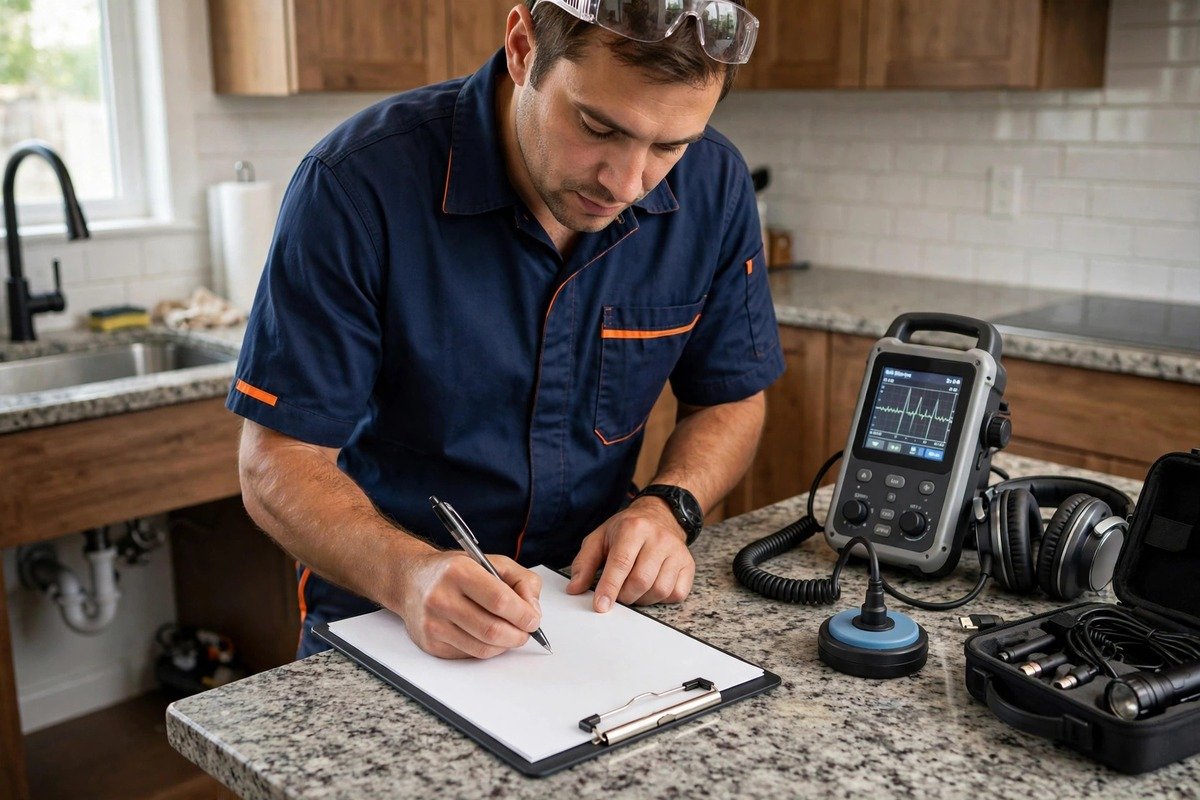
With care and paper. We trace the leak to about one to three feet. So the note names a true spot — not “somewhere under the slab.” We log the way, the date, and the facts in plain words. After the fix, you get a final note and receipts.
Sums as national estimates as of 2026. Visit: $150–$500. Spot fix: $1,500–$4,500. Reroute: $3,500–$7,000. Tunnel: $3,500–$8,000. Epoxy: $3,000–$6,000. Full repipe: $4,500–$15,000. See our cost guide. Hand your adjuster our quote with the note. True sums move claims.
Do insurers accept your report? Our reports are factual, dated, and full. That is the form adjusters use daily. Claim ruling stays with the insurer.
FAQs
Will filing lift my rates?
It may. Ask your agent about claim effects before you file small claims. Weigh the payout and the risk.
How long do I have to file?
Plans set due dates, often soon after you find it. File once you hold our note.
Claim denied — now what?
Get the denial in writing, with the plan words cited. You may appeal. Or ask your agent to review.
Does cover reach mold from a leak?
At times, when tied to paid water harm, often with caps. Plans vary — read yours.
Should I get a few repair quotes for the claim?
One full quote tends to do, but two can help. Our quote uses marked national estimates for easy compare.
Can I start fixes before approval?
For urgent harm, curb it first and log it all. For the full fix, most want to view first.
Insurance policyholders: right records turn a hard claim plain. Call (833) 542-3027. We answer 24/7. Our techs log all that adjusters seek. One visit grounds your claim.