
What Should HOAs and Condo Owners Know About Slab Leaks?
An HOA slab leak raises a tough shared-living question: whose pipe failed, the HOA’s or the owner’s? Our technicians find and fix slab leaks in HOA and condo buildings in all 50 states and DC. A visit takes one to three hours. We trace the leak to about one to three feet. Call at the first sign.
Slab leaks in shared buildings bring two woes: water damage and fights. A leak can start in a shared line but show up inside a unit. Neighbors blame each other. Boards move slowly. All the while, water keeps running. This page helps boards, managers, and owners fix duty, act fast, and keep clean records. CC&Rs differ by community, so check your own rules. This is plain guidance, not legal advice.
Why Are Slab Leaks Tricky in Condos?
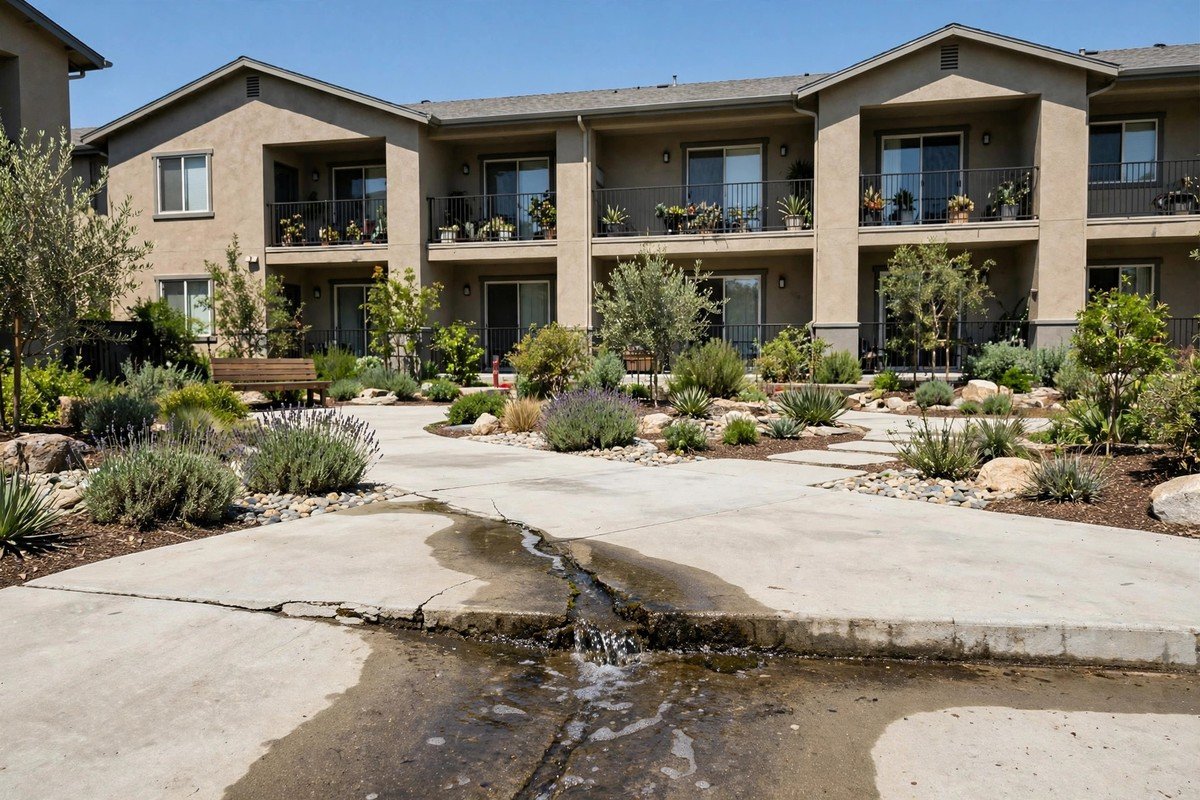
Shared pipes blur each line. One main line under the building can feed six units. One branch line can feed a single unit. Damage shows where water comes up, which can sit far from the break. With no visit, all sides argue over whose pipe failed.
Boards face a second trap: delay. Quotes, meetings, and votes take weeks. Water does not wait. Smart boards approve urgent pipe checks in advance. Then a feared leak gets a visit in days, not months later at a board meeting. Call us at (833) 542-3027. We answer 24/7 and hand boards a written fact sheet to act on.
Can one leak affect some units? Yes. Shared lines and moving water mean one break can dampen more units or spike the master bill.
When Should Boards and Owners Call Us?
Call when anyone reports:
- A warm or damp spot on a ground-floor unit floor.
- Water sounds with all taps shut.
- A jump in the master water bill.
- Damp smells in a unit or hall.
- Water where walls meet the floor.
- Cracks in hall slab floors.
Unit owners should tell the board or manager that same day. Boards should treat leak reports as urgent work, not next-month items. See each sign in our problem guides.
Who Pays: the HOA or the Unit Owner?
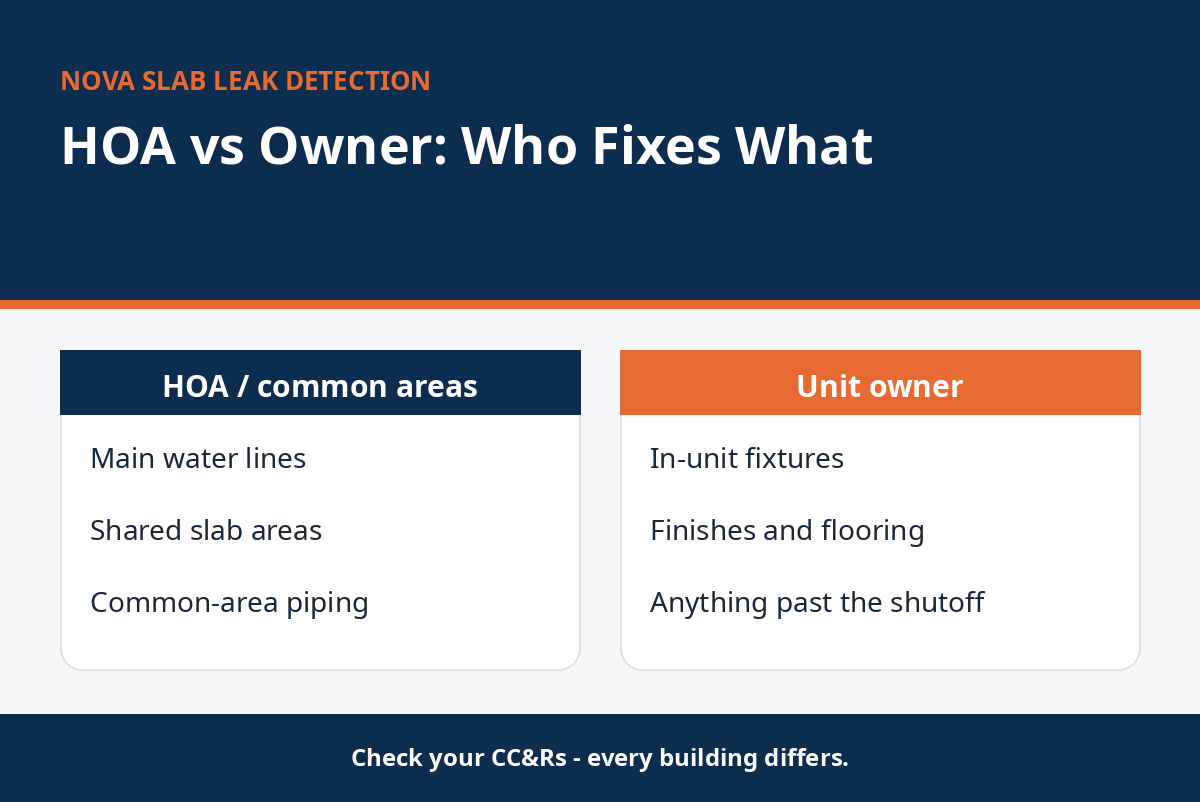
Each board asks this. Broad norms exist, but your CC&Rs rule — and CC&Rs differ a lot.
| Area | Tends to pay | Why |
|---|---|---|
| Main lines that feed many units | HOA | Shared pipe runs |
| Pipes under hall slabs | HOA | Shared zones |
| Branch line that feeds one unit | Often the unit owner | Rules differ by block |
| Taps, fixtures, in-unit finishes | Unit owner | Owner-kept items |
| Harm to a next-door unit | Depends on source and CC&Rs | Source sets duty |
The key move is to find the source. That is what a visit does. Our traced spot, good to about one to three feet, gives the board facts, not views. With the source known, your rules can set duty cleanly. See all our readers on our who we help hub.
What if the CC&Rs are vague? Many are. Get our visit report first. Facts first, then have the board read its own rules.
Who pays if a shared line is the source? As a rule, the HOA pays, from reserves or a special fee per your rules.
Who Does the Work in a Shared Building?
We do. Our firm, Nova Slab Leak Detection, centers on slab leak detection and fix work done by our people. Nova’s own techs do the work. Your tech works with the board, the manager, or the unit owner — whoever holds keys. We work clean in lived-in units and halls.
After the visit, you get a written sheet. Leak spot, method used, fix picks with plain prices. Boards can file it with meeting notes. Owners can send it to insurers. All sides read the same facts.
Do we need access to more units? At times. To trace a run we may need to check next-door units. We set this up with the manager.
Will the visit stir residents? No. It is calm and makes no mess. People can stay home.
How Does a Detection Visit Work in a Condo Building?
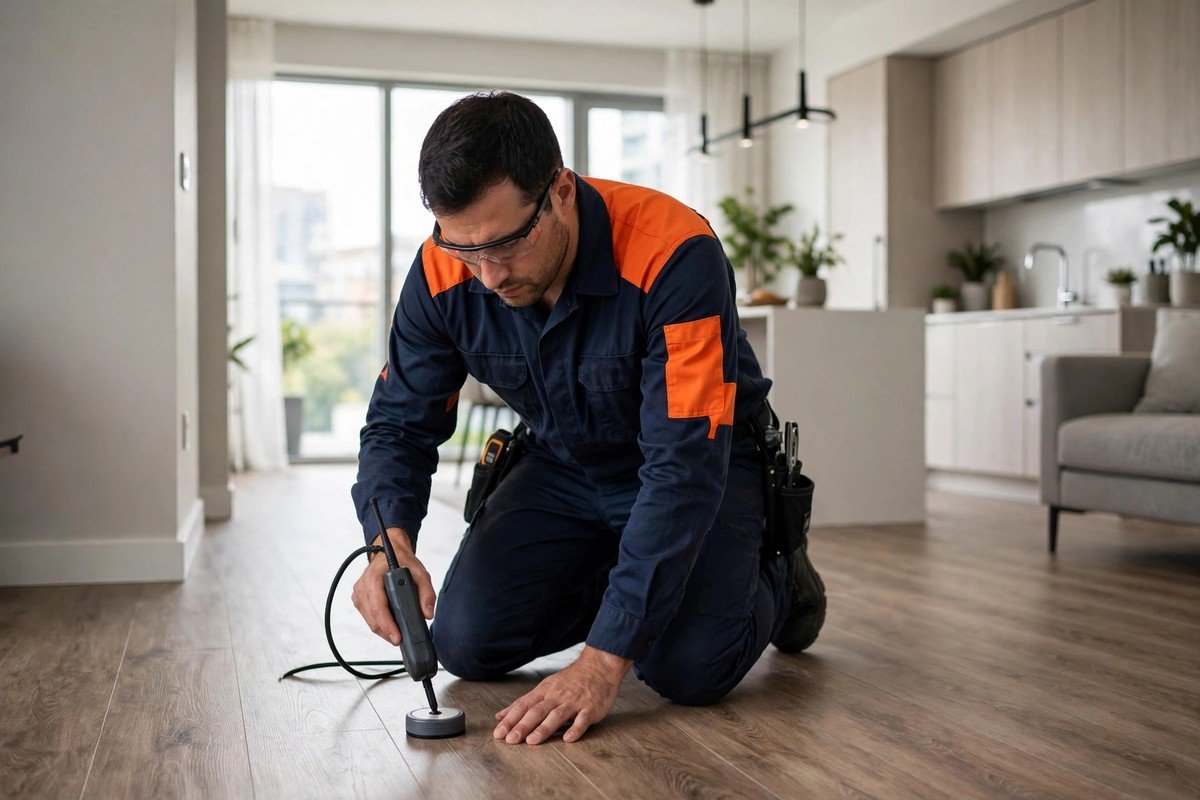
Much as in a house, with more setup. The visit takes one to three hours. We test water force, listen with sound gear, and scan with heat gear. We trace the leak to about one to three feet. We may need into the affected unit plus next-door ones to track the run.
National estimates as of 2026 put a visit at $150–$500, with tough jobs near $600. That small sum often ends the top fight: whose pipe leaks. Learn the steps on our slab leak detection service page.
How Should Boards Decide on Repairs?

A plain path. First, approve a visit at the first firm report. If your rules allow urgent spending, use that. Second, weigh our written facts and quote at the next board vote, even by email vote per your rules. Third, approve the fix and set cost per your CC&Rs.
Fix prices as national estimates as of 2026: spot $1,500–$4,500; reroute $3,500–$7,000; tunnel $3,500–$8,000; epoxy $3,000–$6,000; full repipe $4,500–$15,000. For shared blocks, reroutes and repipes are best. They curb later shared-line faults. Full detail in our cost guide. File our sheet and bills with block records. Later boards will thank you.
FAQs
Can the board okay a visit with no full vote?
Most boards can, per urgent or routine upkeep powers. Read your rules for the spend cap.
What if the owner bars entry?
Most CC&Rs grant the HOA entry for upkeep crises. Read your rules and move via the board.
Does the HOA master plan pay?
At times, for fast harm to shared parts. Plans differ — read yours or ask the HOA agent.
How do we treat harm to a next-door unit?
Find the source first. Then use your CC&Rs on duty and cover. Log it all.
Check all ground units ahead of time?
For old blocks, yes. A planned round on the oldest blocks stops fights before they start.
May owners call you direct?
Yes, but loop the board or manager in too, so duty and pay stay plain. Boards and owners: end the whose-pipe fight. Call (833) 542-3027 — we answer 24/7.