
Post Tension Slab Leak Repair: Why It Needs a Specialist
Your slab may hold steel cables under high tension — here’s why that changes everything.
Post Tension Slab Leak Repair: Quick Answers

- What Is a Post Tension Slab? A post tension slab is a concrete foundation with steel cables running through it in a grid.
- How Much Does Post Tension Slab Leak Repair Cost? National estimates as of 2026: rerouting a line runs $3,500–$7,000; a spot repair through the slab runs $1,500–$4,500.
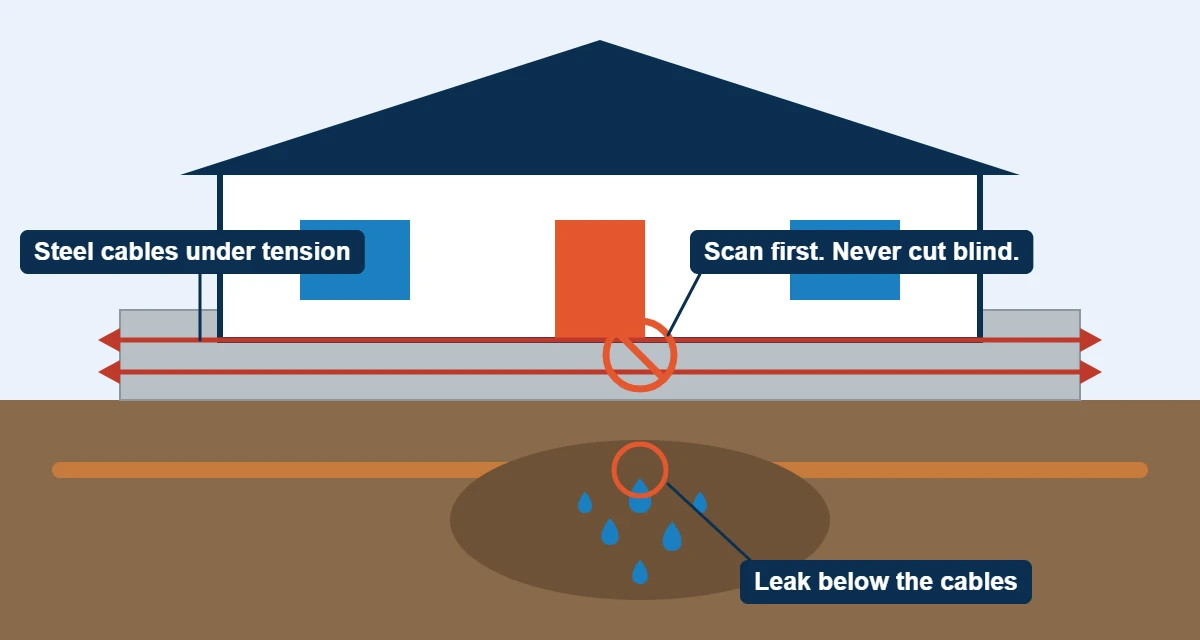
- Why Is Cutting a Post Tension Slab Cable Dangerous? Each cable holds thousands of pounds of tension — think of a giant rubber band locked inside concrete.
What Is a Post Tension Slab?
A post tension slab is a concrete foundation with steel cables running through it in a grid. After pouring, each cable is pulled extremely tight, squeezing the slab stronger with less concrete. That stored tension is why post tension slab leak repair needs a specialist: cutting a tensioned cable can release dangerous force and damage the foundation.
Why Is Cutting a Post Tension Slab Cable Dangerous?
Each cable holds thousands of pounds of tension — think of a giant rubber band locked inside concrete. If cut or badly nicked, a cable can snap back violently, cracking the surrounding concrete, weakening the foundation’s design strength, and injuring anyone nearby. A damaged cable is also expensive to repair, and a poor cable repair can compromise the whole slab. This isn’t a reason to panic; it’s a reason to hire someone who knows the cables are there and plans around them.
How Do Specialists Find the Cables Before Opening the Slab?
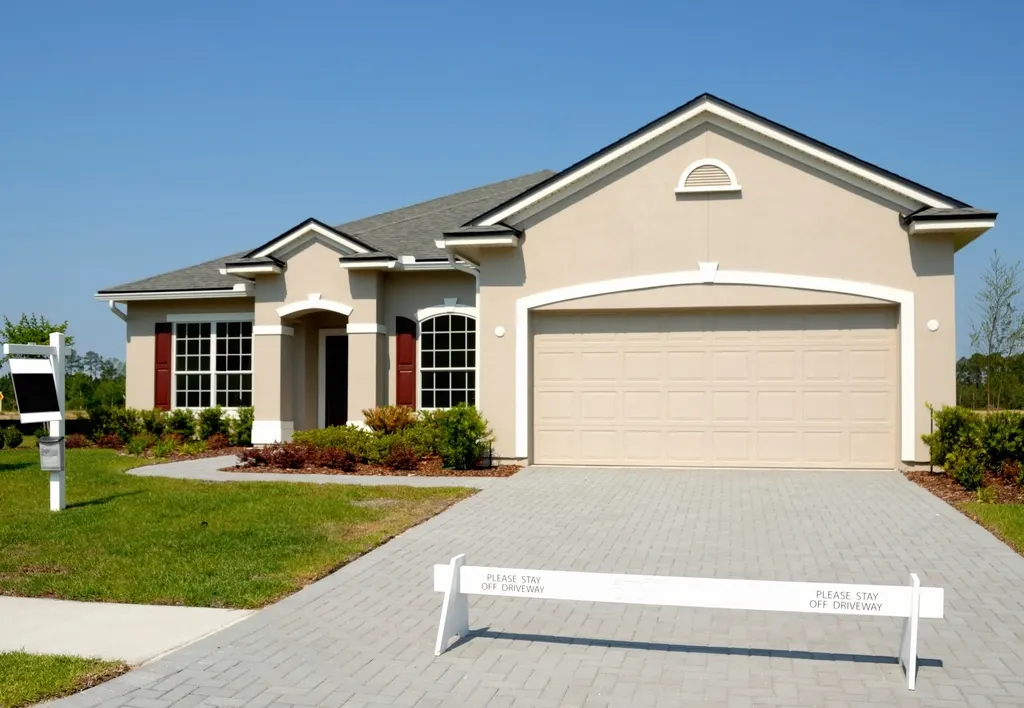
- The slab-edge stamp. Many post-tension homes have a warning stamped into the exposed concrete edge in the garage: “POST-TENSION SLAB — DO NOT CUT OR DRILL.” Check yours today; it takes ten seconds.
- Cable locators and ground-penetrating radar. A handheld scanner sweeps the floor and marks each cable’s path on the surface. This is the standard safe approach, and any reputable pro offers it.
- Original building plans. The builder, your HOA, or the city permit office may have drawings showing the cable layout.
- No records? Scan anyway. A responsible pro treats an unscanned post tension slab as a no-cut zone until the cables are located. If someone is willing to cut blind, find someone else.
Which Post Tension Slab Leak Repair Methods Avoid the Cables?
A specialist plans the repair around the cables instead of cutting blindly — these are the standard approaches within slab leak repair:
- Reroute the line. The most common solution: abandon the leaking section and run a new pipe through the walls or attic. No slab cutting at all. See whole-home repiping.
- Tunnel from outside. The crew digs beneath the slab edge and works underneath the foundation, avoiding the cables entirely.
- A precisely placed small opening. If a breakout is truly needed, the technician cuts only where scanning shows a clear gap between cables — see slab penetration and restoration.
| Approach | Slab cutting | Cable risk | Best for |
|---|---|---|---|
| Reroute the line | None | None — cables untouched | Most post-tension leaks |
| Tunnel from outside | None inside the home | Very low — work stays under the slab edge | Leaks near the slab perimeter |
| Small precisely placed opening | One small, scanned opening | Low — cut only in verified clear gaps | Leaks that cannot be rerouted or tunneled |
How Can You Tell If Your Home Has a Post Tension Slab?
- Age and region. Post tension slabs became common from the 1970s onward, especially in Texas, California, Arizona, Florida, and Nevada — states with expansive soils.
- The garage stamp. Look at the exposed slab edge in your garage for the warning stamp described above.
- Ask around. Your HOA, the original builder, or neighbors with the same floor plan often know.
- Still unsure? Tell the leak detection company before the visit so they bring scanning equipment — mention it when you call Nova.
What Should You Ask Before Anyone Touches Your Slab?
- “How will you locate the post-tension cables — scanning, plans, or both?”
- “Will you mark the cable paths on the floor before cutting anything?”
- “Can this leak be fixed with a reroute instead of opening the slab?”
- “What happens — and what does it cost — if a cable is damaged?”
- “Is cable scanning included in your quote or billed separately?”
Get the answers in writing. The FTC’s home-improvement hiring guide is a useful checklist for any major job: consumer.ftc.gov
How Much Does Post Tension Slab Leak Repair Cost?
National estimates as of 2026: rerouting a line runs $3,500–$7,000; a spot repair through the slab runs $1,500–$4,500. Cable scanning may add to the detection cost — ask upfront so it’s in the quote, not a surprise.
The honest limit: no company can promise zero risk around tensioned cables. What a specialist offers is a managed process — locate, mark, avoid, verify. Anyone who shrugs at the cables is someone to walk away from.
When Should You Call About a Post Tension Slab Leak?
If you have leak signs — a spiking water bill, warm floor spots, the sound of running water with everything off — and a post-tension home, don’t wait. Water under a tensioned slab still erodes soil and feeds mold like any slab leak. For active, urgent situations, see emergency leak detection. Call Nova at (833) 542-3027 any time — the line is open 24/7, calling is free, and Nova will send a technician experienced with post tension slabs.
Post Tension Slab Leak Repair: Frequently Asked Questions
Related Services
- Epoxy Lining vs Repiping: Two ways to fix failing pipes under your slab — here’s how to choose honestly.
- Slab Penetration and Restoration: A small, precise opening in the slab — then your concrete is restored like it was never touched.
- Slab Leak Repair: Four proven ways to fix a leak under your slab — and how to pick the right one.
- Slab Leak Detection: How non-invasive detection finds a leak under concrete, with methods, cost and accuracy.
- Whole Home Repiping: When patching old pipes stops making sense, a full repipe ends the cycle.
Leak Under a Post Tension Slab? Call Nova Today
Call any time, day or night. Tell us your ZIP code and what you are noticing, and we will book your visit.