
What Should Property Managers Know About Slab Leaks?
A property manager slab leak is a three-way issue: tenant wants it fixed, owner wants it cheap. We find and fix slab leaks across rental portfolios in all 50 states and DC. A visit takes one to three hours. We trace the leak to about one to three feet. One call starts it all.
You run the building, the people, and the paper trail. Tenants report vague signs. A warm floor. A high bill. A stale smell. Owners want answers and receipts. This page shows how to sort reports. Plan work by unit. Keep records that calm owners. If you own the rentals yourself, see our landlords page. All reader pages live on our who we help hub.
Why Do Tenant Leak Reports Need Fast Triage?

Tenants live with the signs daily. They spot trouble early but say it poorly. “The floor feels odd” can mean a slab leak or a spill. Your job is to sort real signs from noise fast. Each day of wait lets water eat soil under the slab. Lost soil cracks floors and lifts fix costs.
Speed guards you too. Laws shift by state. Leases shift too. Check both. Know your town duties. A dated, fast reply shows owners and tenants you moved well. Slow replies breed gripes and doubt. Sort each note the day it lands.
How do I tell a slab leak from a tenant-caused leak? Check three signs: a warm or damp floor spot, water sounds with taps off, a bill jump. Two yes answers mean call us.
Should I see the unit before I call? A quick look helps. Feel floors, listen for water, check the meter. Then call with what you found.
When Should Property Managers Call Us?
Call us when any unit shows:
- A tenant reports a warm, damp, or stained floor spot.
- Running water sounds with all fixtures off.
- A bill spike for one unit or one building.
- Stale smells tenants cannot place.
- Cracks in slab-level floors or loose baseboards.
- Weak pressure complaints from one unit.
Also call for pre-turnover checks on older buildings. And after any foundation or pipe work. We answer 24/7 at (833) 542-3027. See the full sign list in our problem guides.
Where Do Portfolio Leaks Cause the Most Trouble?
Ground-floor units stand on the front line. They sit right on the slab. But upper units feel it too. Shared lines run through slabs and walls. One leak can lift a whole block bill. Check shared slab zones too: halls, washrooms, garages.
Sort blocks by age, not just by gripe. A 30-year-old block with old copper lines gets a yearly check. Yearly visits on your oldest blocks catch leaks before tenants do.
Who Does What on a Manager-Handled Job?
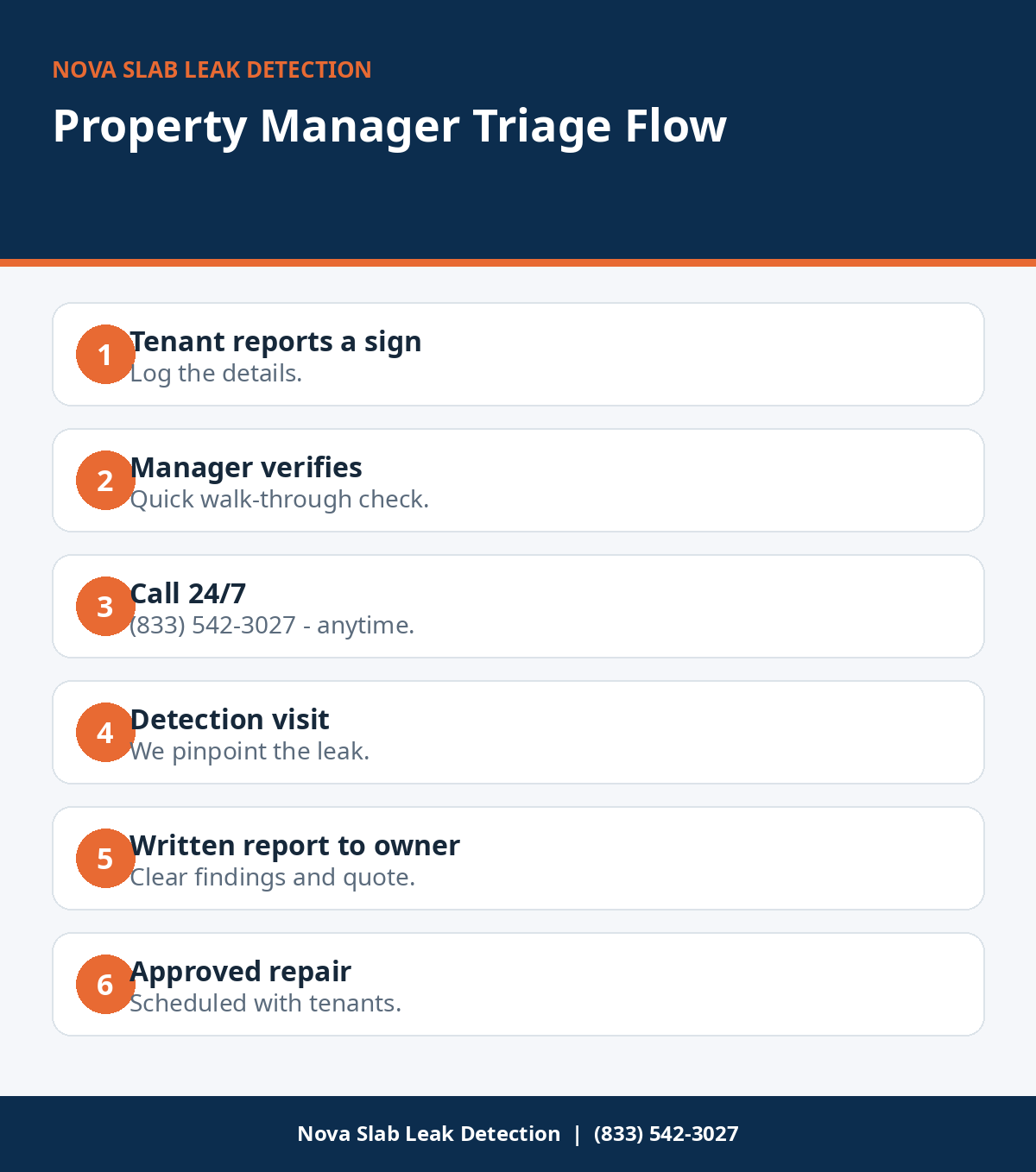
Clear roles keep jobs smooth. The tenant reports and grants entry. You sort, book, and brief the owner. We find, explain, and fix. We at Nova Slab Leak Detection are a slab leak detection and fix outfit, and our own crew does the work. Nova’s own technicians do the work. Your tech sets entry with you or the tenant.
We keep you posted at each stage. Facts after the visit. Picks with clear prices. A written note after the fix. You pass owners what they need and file the rest. No chase. No haze.
Can your tech deal with tenants? Yes. We book with tenants and work clean and quiet. We confirm with you.
Do I need owner approval before the visit? That rests on your management agreement. A visit costs little, and many agreements let you approve it as routine upkeep. Check your terms.
How Do We Work Across Multiple Units?

One call can serve a whole book. Name the units or blocks with signs. We plan a tight route, at times more than one visit a day. Each visit takes one to three hours. Each traces leaks to about one to three feet. By national estimates as of 2026, a visit is $150–$500.
For fixes, we order units to curb fuss. Spot fixes ($1,500–$4,500) suit one clear leak. Reroutes ($3,500–$7,000) dodge slab work in lived-in units. Old blocks, repeat leaks: a repipe plan ends the cycle. Cost: $4,500–$15,000 per home. See our cost guide. We quote plain. You show owners clear options.
What Records Should You Keep for Owners?

Good files are your shield. For each leak job, keep:
- The tenant first note, with date.
- Your sort notes and call date.
- Our written visit notes.
- The fix quote and owner okay.
- Our final note and receipts.
This file meets owner queries: what broke, when you moved, cost, crew. It backs claims too. Sudden harm is often paid. Plans vary. Check the plan or ask the agent. Our insurance claims guide lists what adjusters want.
How detailed are your written reports? Clear and plain: leak location, method used, repair done, and cost. Built for forwarding to owners.
FAQs
Can you handle emergency calls at night?
Yes. We answer 24/7 at (833) 542-3027. Burst situations get priority slots.
Do tenants need to leave during detection?
No. Detection makes no mess and stays quiet. Tenants can remain in the unit.
How do I tell owners the cost?
Pair our plain quote with national estimates in our cost guide. Owners see each sum and why.
Can you check a block ahead of time?
Yes. We plan block-wide checks. Ground floors and oldest lines first.
Who pays, owner or tenant?
As a rule, the owner. Pipes are block systems. Laws shift by state. Leases shift too. Check both.
Do you work with our crew?
Yes. We set entry and share notes, and your team takes it from there. One call covers each unit and each owner update. Call (833) 542-3027 — we answer 24/7 and you get written records that keep owners confident.