
Services › Slab Leak Detection
Slab Leak Detection: Find the Leak Without Breaking Concrete
Local specialists use sound, heat, and tracer gas to pinpoint a leak under your foundation, usually within 1 to 3 feet, before any concrete is opened.
What Is Slab Leak Detection?
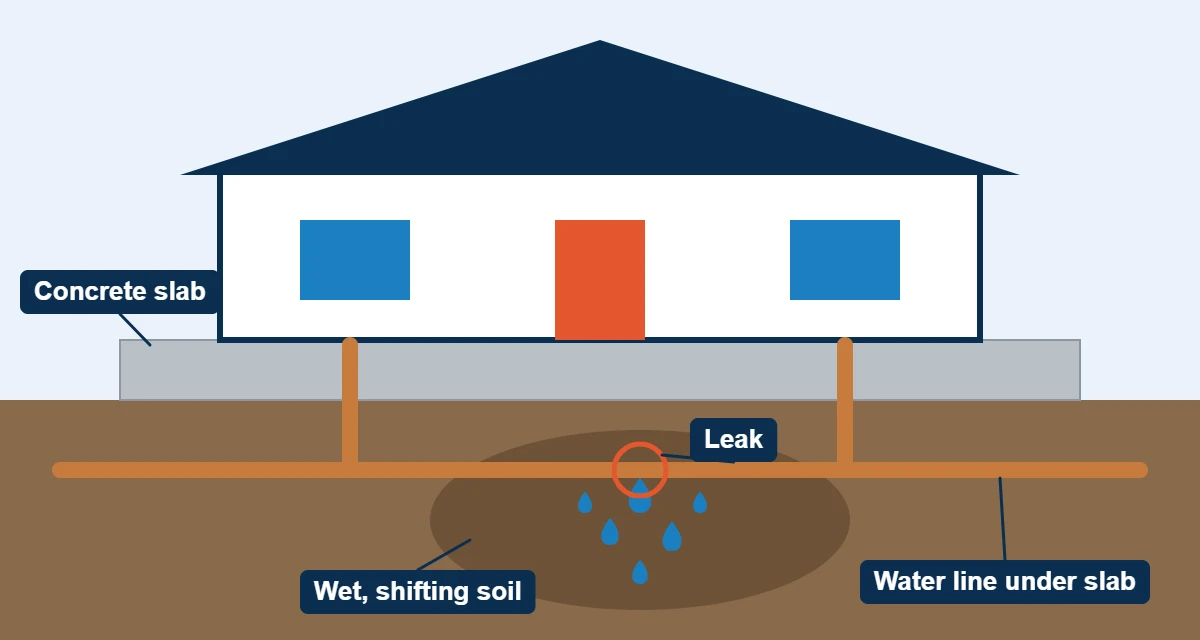
Slab leak detection is a non-invasive test that locates a leaking water or drain pipe under a concrete foundation. A technician confirms that a leak exists, works out which line it is on, and marks the spot on your floor. No jackhammer is used during detection.
It matters because the pipe is hidden. Guessing means breaking more concrete than needed, or opening the floor in the wrong place. A marked location keeps the repair small and gives you a clear basis for comparing repair options.
Slab leak detection is a separate step from repair. You get the location and findings first, then decide how to fix it.
WHAT IT FINDS
What Slab Leak Detection Can and Cannot Tell You
Slab leak detection tells you whether a line under the slab is leaking, which line it is, and where to reach it. In most homes that is a single marked spot on the floor.
It can also find more than one leak. After the first leak is located, the technician re-tests the line. If pressure still drops, there is a second leak, and the process repeats. This matters in older copper systems, where pinholes often appear in groups.
What it cannot tell you is the condition of every foot of pipe. A line that holds pressure today can still be thin from corrosion. If your home has had two or more slab leaks, ask for an honest opinion on whether repair or repiping makes more sense.
When Do You Need Slab Leak Detection?
Book detection when you have signs of a hidden leak and no visible source. The most reliable signs are:
- Your water bill rose sharply with no change in use.
- Your water meter keeps moving when every fixture is off.
- You hear water running or hissing in the floor or walls.
- A patch of floor feels warm, or carpet and wood feel damp.
- New cracks appear in tile, flooring, or walls.
- A home inspection or moisture reading flagged the slab.
A 5-minute check you can do first
- Turn off every tap, appliance, and irrigation zone.
- Find your water meter and note the reading, or watch the small leak indicator dial.
- Wait 30 minutes without using water.
- If the reading changed or the dial is turning, water is escaping somewhere.
- Shut the valve to your water heater and repeat. If the meter stops, the leak is likely on a hot-water line.
This check tells you a leak exists. It cannot tell you where it is. That is what professional equipment is for.
How Do Pros Find a Leak Under Concrete?
They combine several methods, because no single tool works on every pipe and every floor.
Acoustic listening
Pressurized water escaping a pipe makes a sound. Ground microphones and electronic amplifiers pick it up through the slab, and the technician follows it to its loudest point.
Thermal imaging
An infrared camera shows temperature differences on the floor surface. A hot-water leak appears as a warm plume spreading from the pipe.
Tracer gas
The line is drained and filled with a safe gas mix, either helium or hydrogen-nitrogen. The gas escapes at the leak, rises through the concrete, and is found with a surface sensor. It works well on very small leaks.
Pressure and isolation testing
Each line is isolated and pressurized. A line that will not hold pressure is the one that is leaking. This confirms a leak before anything is opened.
Video pipe inspection
A camera is run through drain lines under the slab to show cracks, breaks, and root intrusion. It is used for sewer leaks, which make no pressurized sound.
Moisture mapping
Moisture meters measure how far water has spread through flooring and walls, which also guides drying after the repair.
METHODS COMPARED
Slab Leak Detection Methods Compared
No single slab leak detection method works on every home, so technicians start with the fastest one and add others until the readings agree. Here is where each method is strong and where it falls short.
| Method | Works best on | Limits |
|---|---|---|
| Acoustic listening | Pressurized copper supply lines under tile or bare concrete. | Plastic pipe carries sound poorly. Traffic, appliances, and thick carpet add noise. |
| Thermal imaging | Hot-water line leaks, which spread a warm plume under the floor. | Shows little on cold-water leaks. Radiant floor heat and sun-warmed floors confuse the picture. |
| Tracer gas | Very small leaks and plastic lines that make almost no sound. | The line must be drained first, so it takes longer and costs more. |
| Pressure and isolation testing | Proving a leak exists and which line it is on. | Tells you which line, not where on the line. |
| Video inspection | Sewer and drain lines under the slab. | Cannot enter small pressurized supply lines. |
| Moisture mapping | Measuring how far water has spread. | Water travels, so the wettest spot is not always the leak. |
This is why a careful technician will not mark your floor on the strength of one reading. Two methods pointing to the same spot is the standard to ask for.
Tools Used in Slab Leak Detection
| Tool | What it does |
|---|---|
| Ground microphone / acoustic listening device | Hears pressurized water escaping through concrete. |
| Electronic amplifier and correlator | Filters background noise and compares sound at two points to narrow the location. |
| Thermal (infrared) camera | Shows warm or cool surface patterns from hot- or cold-water leaks. |
| Tracer gas detector | Senses helium or hydrogen at the floor surface above the leak. |
| Pressure gauges and test plugs | Prove which line is losing pressure. |
| Video inspection camera | Shows the inside of drain lines under the slab. |
| Moisture meter and thermo-hygrometer | Measure moisture in flooring, walls, and air. |
| Pipe and cable locator | Traces the path of buried lines and, in post-tension slabs, helps avoid steel cables. |
Equipment varies by company. Ask your pro which methods they plan to use and why.
LEAK TYPES
Hot-Water, Cold-Water, and Drain Line Leaks
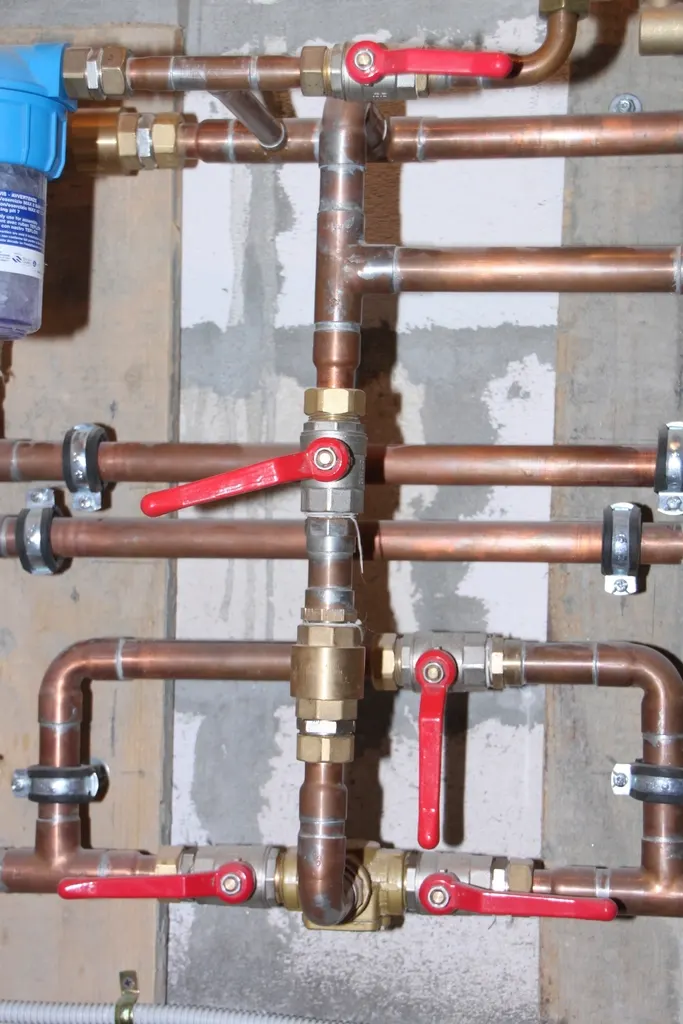
Slab leak detection starts by working out which kind of line is leaking, because each one behaves differently.
- Hot-water supply lines are the most common source. They expand and contract every time hot water runs, which wears them against the concrete. They are usually the fastest to find, because the heat shows on a thermal camera and under bare feet.
- Cold-water supply lines give no heat signal. The technician pressurizes the line and listens, or uses tracer gas. Expect this to take longer.
- Drain and sewer lines are not pressurized, so they do not raise your water bill or move your meter. Signs are slow drains, sewage odor, and soil washing out under the slab. They are found with a camera and a hydrostatic test.
A quick way to tell hot from cold yourself: close the valve on your water heater and watch the meter. If it stops moving, the leak is on the hot side.
What Happens During a Slab Leak Detection Visit?
- Walk-through. You describe the signs and when they started. The technician checks the meter, water heater, and manifold.
- Confirm the leak. A pressure test shows whether the system is losing water and whether the leak is on the hot or cold side.
- Trace the line. A locator maps where the pipe runs under your floor.
- Pinpoint. Acoustic, thermal, and tracer gas readings are compared until they agree on one spot.
- Mark and explain. The spot is marked on the floor. You are told what was found and what your repair options are.
How long does slab leak detection take?
Most slab leak detection visits take 1 to 3 hours. Large homes, multiple leaks, thick flooring, or noisy surroundings can add time. Tracer gas testing takes longer than acoustic testing because the line has to be drained first.
How accurate is it?
With professional equipment, a single leak on a pressurized line is typically pinpointed within about 1 to 3 feet. Detection is not perfect. Deep pipes, plastic lines that carry sound poorly, very small leaks, and more than one leak on the same line can all make the result less certain. A good technician tells you how confident the reading is before anyone cuts concrete.
BEFORE THE VISIT
How to Prepare for a Slab Leak Detection Visit
Ten minutes of preparation makes slab leak detection faster and more accurate. Before the technician arrives:
- Find your main water shutoff valve and your water meter, and make sure both can be reached.
- Clear access to the water heater, the manifold if you have one, and the area where you suspect the leak.
- Turn off washing machines, dishwashers, ice makers, and irrigation timers so the house is quiet and no water is running.
- Write down what you have noticed and when it started, including the date your water bill first rose.
- Have your last three water bills ready.
- Take dated photos of any damage for your insurer before anything is moved.
- Keep pets in another room. Detection involves listening for very faint sounds.
What a slab leak detection report should include
Ask for the findings in writing. A useful report states which line is leaking, the marked location with a photo, the methods used, how confident the technician is in the location, and the repair options. Insurers and home buyers both ask for this document.
How Much Does Slab Leak Detection Cost?
Slab leak detection typically costs $150 to $500 in the US, and up to about $600 for complex cases. These are national estimate ranges as of 2026, not a quote.
| Cost factor | Effect on price |
|---|---|
| Home size and number of lines | More pipe to test means more time. |
| Methods needed | Tracer gas and camera work add cost over acoustic testing alone. |
| Hot vs. cold line | Hot-water leaks are often faster to find with thermal imaging. |
| Floor covering | Thick tile, wood, or multiple layers make listening harder. |
| After-hours or emergency visit | Night, weekend, and holiday calls usually cost more. |
| Local market | Rates differ between metro areas and states. |
Ask whether the detection fee is credited toward the repair if you hire the same company. Policies differ. Your local pro gives you the price before work begins.
What About Post-Tension Slabs?
Post-tension slabs contain steel cables under high tension, so they must never be cut blind. Many homes built since the 1990s in Texas, Arizona, Nevada, and California have them, and they are usually stamped at the garage floor edge. Detection itself is safe because it is non-invasive. For the repair, the technician locates the cables first or chooses a reroute that avoids opening the slab.
After Detection: What Are Your Options?
| Option | Best when | Typical US range |
|---|---|---|
| Spot repair | One leak, pipe otherwise sound | $1,500 – $4,500 |
| Reroute | Leak under hard-to-open flooring, or aging line | $3,500 – $7,000 |
| Tunneling | You want floors left untouched | $3,500 – $8,000 |
| Epoxy lining | Several pinholes in an accessible line | $3,000 – $6,000 |
| Whole-home repipe | Repeat leaks across the system | $4,500 – $15,000 |
WHY IT MATTERS
Why Early Slab Leak Detection Matters
The longer a slab leak runs, the more it costs in water, materials, and repairs. The US Environmental Protection Agency reports that the average household’s leaks can waste more than 9,300 gallons of water a year, and that 9 percent of homes have leaks wasting 50 gallons or more a day (EPA WaterSense).
Moisture is the second cost. The EPA advises drying water-damaged materials within 24 to 48 hours to prevent mold growth (EPA: A Brief Guide to Mold, Moisture and Your Home). A leak under a slab keeps the underside of your flooring wet for as long as it runs.
The third cost is structural. Water under a foundation washes out sandy soil and swells clay soil. Either one can crack tile, lift flooring, and shift the slab. Early slab leak detection keeps the repair to a pipe problem instead of a foundation problem.
WHO TO CALL
Slab Leak Detection Specialist or General Plumber?
Call a slab leak detection specialist to find the leak, and compare repair quotes once it is marked. General plumbers repair pipes every day, but many do not carry acoustic correlators, thermal cameras, or tracer gas equipment. Without them, the usual approach is to open the floor where the water shows and follow it back.
A specialist works the other way round: locate first, open second. That usually means one small opening in the right place, or no opening at all if a reroute is the better repair. Many detection companies also do repairs, and some plumbers do have full detection equipment, so ask what tools will be used before you book.
WHO NEEDS IT
Slab Leak Detection for Buyers, Sellers, and Landlords
Slab leak detection is not only for emergencies. It is also used to settle questions before money changes hands.
- Home buyers. If an inspection flags moisture, cracks, or a moving meter, a detection test before closing shows whether there is a leak and what the repair would cost.
- Sellers. A clean written report answers buyer concerns and supports your disclosures.
- Landlords and property managers. A report documents the cause and date of a leak, which helps with tenant questions and insurance claims.
- Owners filing a claim. Insurers usually want proof of where the leak is and when it was found.
In each case, ask for the slab leak detection findings in writing, with photos of the marked location.

Slab Leak Detection FAQs
Find Your Slab Leak Before It Gets Bigger
Call any time, day or night. Tell us your ZIP code and what you are noticing, and we will connect you with a local slab leak detection pro.