
Why Do Downey Homes Get Slab Leaks?
For slab leak detection Downey California needs, we know old ranch-home copper. Homes in the northeast date to 1955 and 1965. Most of the city went up in the postwar years. The pipes went in with the homes. They are now sixty to seventy years old.
Copper fails in silence. Local basin water runs hard. It coats lines in scale. Years of scale wear pipe walls thin. Tiny holes form under the slab. No sound. No puddle. Just water spreading through soil. Many listings here still note old copper pipes. That shows how much of it is still in use.
Soils add strain. Town land is flat coastal ground with clay seams. Clay swells and shrinks as moisture shifts. Each round bends the buried pipes. Old trees send roots toward weak joints in aging lines. After sixty to seventy years, the mix wins.
How hard is Downey’s tap water?
Downey’s water report lists hardness at 15.7 grains per gallon. Readings range from 7.9 to 21.5. That sits in the hard to very hard band. Calcium and magnesium coat copper lines each year. Postwar ranch homes carry sixty to seventy years of scale. Thin pipe walls are the result. We gauge the wear before we test.
Why do Downey’s old trees threaten old pipes?
Big old trees line many Downey blocks. Roots chase the damp soil near weak pipe joints. Old copper joints from the 1950s and 1960s leak tiny amounts first. Roots find that damp spot and push in. The push cracks the joint wider. Each year the crack grows. We watch for root zones on each visit.
How Do I Know If My Downey Home Has a Slab Leak?
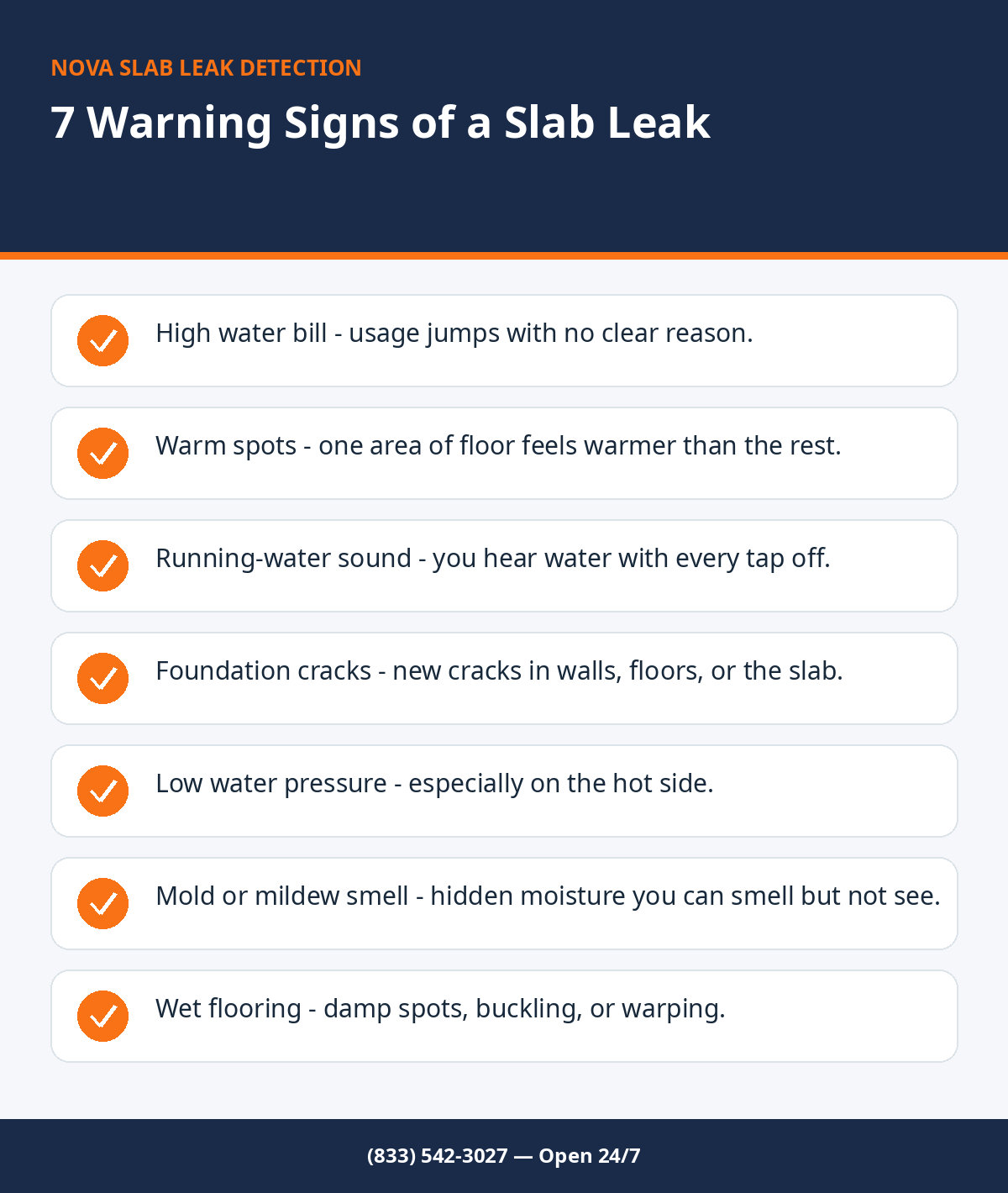

Feel for a warm patch on the floor that never cools. Listen for water with all taps off. Check the bill for a jump you cannot explain.
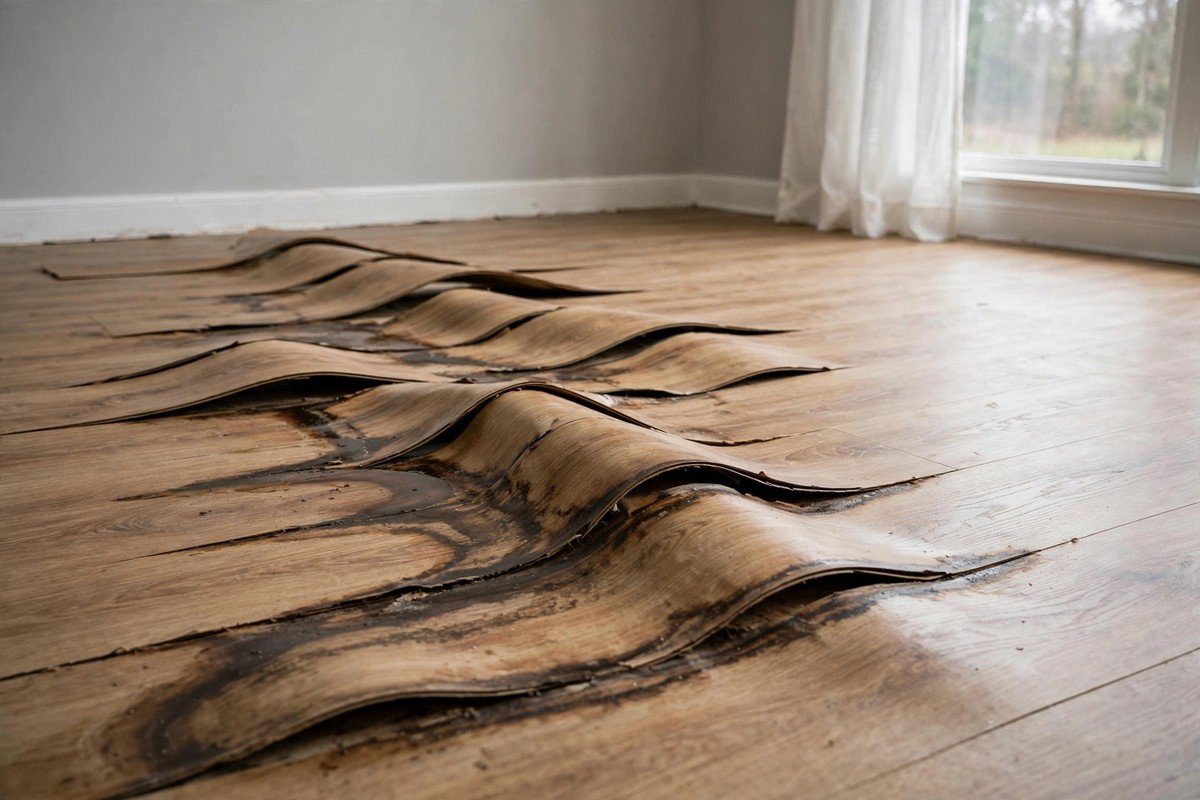
Cracked tile, damp carpet edges, and warped wood can mean water rising from below. A musty smell by the baseboards is another clue. If your meter spins with nothing on, you likely have a leak.
Can a slab leak truly hide for months? Yes. Water under a slab spreads slowly through soil. Many owners here only learn of it when the bill comes or a floor warps.
Does a hot spot always mean the hot line? Nearly always. Warm floor patches point to the hot line. Cold damp spots mark the cold line.
Which Downey Neighborhoods Do We Serve?
We serve every corner of the city. We stop in these zones most:
Northeast Downey — Homes from 1955 and 1965 north of Firestone. Old copper at top leak age.
North Downey — Long-settled tracts with 1950s ranch homes and big old trees.
Southwest and Southeast Downey — Midcentury homes south of Firestone, some from the 1940s.
We also serve downtown Downey, the blocks by the Rio San Gabriel, and all four ZIP codes: 90239, 90240, 90241, and 90242.
Areas and ZIP Codes We Serve in Downey
We cover all of Downey. These are the ZIP codes:
90239, 90240, 90241, 90242
Call (833) 542-3027 — we never close.
What Happens During Our Slab Leak Visit in Downey?
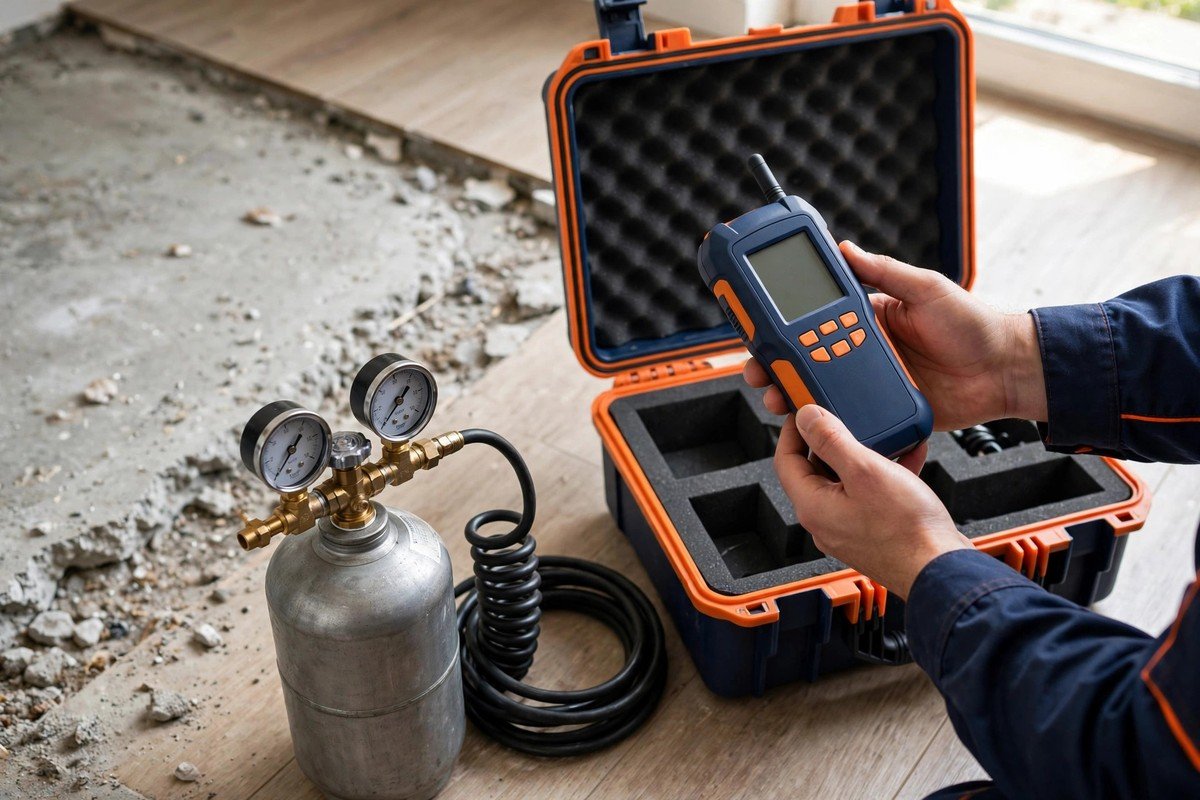
Our technicians carry sound gear, a heat camera, and trace gas tools. It takes one to three hours. Your home takes no harm.
- Prove it — We check your meter. We put each line to the test.
- Listen — Sound sensors catch the hiss under the slab.
- Scan — The heat camera reveals warm floor zones.
- Trace — Trace gas finds what sound and heat miss.
- Report — We give you written notes. They place the leak within about one to three feet. They list fixes and firm prices.
Can you test a home with 1955 pipes? Yes. Most homes we test here are that age. Our tools handle them well.
Will you break my floor? No. We break nothing at all.
How long will the visit run? It takes one to three hours for most homes here.
See how our Downey leak check visits work.
What Are the Repair Options for a Slab Leak in Downey?
After we map your leak, your technician goes over your fix options. Price ranges are national estimates as of 2026.
- Spot repair — We break one small slab patch and fix the one leak. A spot repair lies in the national $1,500 to $4,500 band. Best for newer pipe with one lone bad spot.
- Pipe reroute — We string new lines through your attic or walls. A reroute comes in the national $3,500 to $7,000 band. For 1950s and 1960s copper, a reroute is often the top fix.
- Tunneling — We dig under the slab from outside to reach your pipe. Tunneling comes in the national $3,500 to $8,000 band. It shields finished floors.
- Whole-home repipe — We replace each old line in your home. A whole-home repipe is in the national $4,500 to $15,000 band. Worth a hard look for old postwar pipe runs.
National estimates as of 2026 list a leak check at $150 to $500. Tough jobs may reach about $600.
Leaks here cause high water bills and hot spots on floors. Our Downey repair services and cost guide cover next steps.
My home was built in 1955. Which route is best? With old copper at seventy years, a repipe often ends the leak cycle. A reroute fits when the rest tests sound.
Dial (833) 542-3027 now. We serve Downey and all of California.
FAQs
How much does slab leak detection cost in Downey? National estimates as of 2026 list the cost at $150 to $500. Tough jobs may reach about $600. Written notes and firm fix prices come standard.
Do you serve northeast Downey? Yes. We serve the northeast, north, southwest and southeast, downtown, and all four ZIP codes.
Why do 1950s homes leak so often? Old copper here is now over seventy years old. Hard water and soil shift wear old pipe to tiny holes.
How fast can you come out? Call (833) 542-3027 — we never close. We book visits the same day in most cases.
Can you detect a leak under new flooring? Yes. Our sound and heat tools read through tile, wood, and laminate with no harm.
Will my plan cover the repair? Plans are not the same. Most pay for water harm but skip the pipe fix. Check what your plan says.